

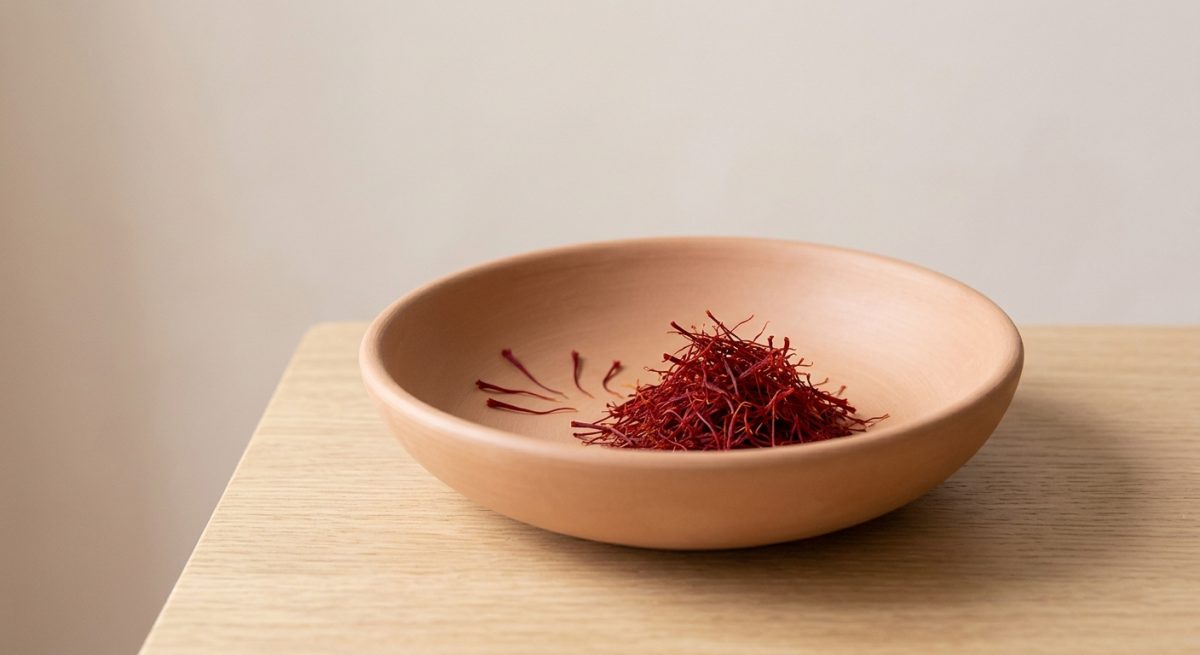
Saffron is one of the world’s most valuable spices, but its value also makes it particularly vulnerable to adulteration, inconsistent grading, and misleading claims. For buyers and businesses, knowing how to distinguish high-quality saffron from inferior or adulterated products is essential.
Quality is not simply about how expensive saffron is. It is about authenticity, purity, handling, processing, storage, and the characteristics of the final product.
What Makes Saffron High Quality?
True saffron consists of the dried stigmas of the Crocus sativus flower. Each flower produces only a small amount of saffron, and harvesting requires careful manual work. This combination of limited yield and labor-intensive harvesting contributes to saffron’s value.
High-quality saffron should have a consistent appearance, characteristic aroma, and strong coloring ability. However, visual inspection alone is not enough to establish authenticity.
For professional buyers, quality assessment should combine sensory evaluation with appropriate analytical methods and documentation.
1. Look at the Saffron Threads
Whole saffron threads are generally easier to evaluate than powdered saffron.
The stigmas should have a natural deep red to crimson appearance. Threads that appear unusually uniform, excessively bright, or inconsistent with the characteristic structure of saffron deserve closer examination.
The physical form also matters. Whole threads allow buyers to inspect the product before it is processed or incorporated into another product.
Powdered saffron can be legitimate, but its appearance makes visual authentication considerably more difficult.
2. Aroma Matters
Authentic saffron has a distinctive aroma that is difficult to describe with a single word. It can have floral, earthy, honey-like and hay-like characteristics.
A weak, musty, chemical, or otherwise unusual smell may indicate poor storage, degradation, contamination, or an adulterated product.
Storage conditions are particularly important because exposure to moisture, heat, light and oxygen can gradually affect saffron’s quality.
3. Color Is More Than Appearance
One of saffron’s most important characteristics is its ability to release color.
However, a strong red appearance does not automatically mean that a saffron sample is superior. Professional quality evaluation looks beyond what the eye can see and measures relevant chemical characteristics.
Internationally recognized analytical methods can be used to evaluate saffron’s coloring strength, aroma-related compounds, and bitter taste characteristics.
This is particularly important for commercial transactions, where objective testing can provide a more reliable basis for comparing products from different suppliers and origins.
4. Beware of Adulteration
Because saffron commands a high price, fraudulent products may attempt to imitate its appearance or increase the apparent weight of a product.
Potential adulteration can involve adding other plant materials, coloring agents, or substances that imitate saffron characteristics.
This is one reason why purchasing from traceable suppliers and requesting appropriate documentation is important.
For businesses importing or processing saffron, relying solely on appearance or price is not an adequate quality-control strategy.
5. Origin and Traceability
The origin of saffron is an important part of its identity.
Saffron is produced in several regions with distinctive agricultural traditions, including Iran, Spain, India, Afghanistan, Greece, Morocco and other producing areas.
Origin alone, however, should not be treated as a substitute for quality testing.
A reliable supply chain should allow buyers to understand where the saffron was produced, how it was processed, how it was packaged, and how it was stored before reaching the market.
Traceability creates accountability throughout the supply chain.
6. Packaging and Storage
Even excellent saffron can lose quality when it is poorly packaged or stored.
Saffron should be protected from excessive heat, moisture, light and air. Appropriate packaging helps preserve its aroma, color and other characteristics throughout distribution.
For commercial buyers, packaging should also provide clear information about the product, including origin, quantity, batch information and other relevant labeling requirements.
Why Saffron Quality Standards Matter
Quality standards do more than protect consumers.
They help create a fairer market for producers, traders, processors and packagers who invest in producing genuine, high-quality saffron.
Clear quality requirements also make international trade easier by giving buyers and sellers a common basis for evaluating products.
This is particularly important as saffron moves through increasingly complex global supply chains.
The World Saffron Association’s mission includes advancing the saffron industry while promoting quality, integrity and sustainability throughout the journey from cultivation to consumption.
A Better Approach to Buying Saffron
Whether you are a consumer buying a small package or a company sourcing saffron for international trade, several principles can help:
- Prefer whole saffron threads when appropriate.
- Purchase from traceable and reputable suppliers.
- Ask about origin and processing.
- Check packaging and storage conditions.
- Request appropriate quality documentation for commercial purchases.
- Use laboratory testing for professional or high-value transactions.
- Be cautious of unusually low prices.
- Do not judge quality solely by color or appearance.
Building Trust in the Global Saffron Industry
Saffron’s reputation depends on the integrity of the entire industry.
Producers need fair markets. Traders need reliable quality. Processors need consistent raw materials. Consumers need authentic products. And international markets need transparent standards.
Quality assurance connects all of these interests.
By improving traceability, education, testing and responsible trade practices, the saffron industry can protect the value of this remarkable spice while creating greater confidence for everyone involved.
The future of saffron depends not only on producing more, but on protecting the meaning of quality.